MISCELLANEOUS 2334319 Fleet Engineer N/a
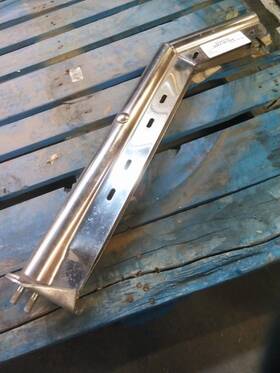
( Brand: Miscellaneous ), ( Manufacturer Part Number: 2334319 ), ( Type: Accessories ), ( Side: Both )
Review MISCELLANEOUS Fleet Engineer All Accessories
Introducing the Miscellaneous 2334319 N/A Fleet Engineer, a versatile and indispensable tool for any professional fleet maintenance operation. Designed to meet the rigorous demands of the transportation industry, this engineered component guarantees reliable performance under heavy-duty use.
This Fleet Engineer, with component number 2334319 and a Not-Applicable (N/A) designation, is an essential part of a fleet maintenance program. It is meticulously designed and manufactured adhering to the highest industry standards to ensure peak performance and longevity.
The Miscellaneous 2334319 Fleet Engineer showcases an outstanding combination of durability and adaptability. Constructed from top-tier materials, it boasts resistance to extreme temperatures, corrosion, and wear. Its sturdy build enables it to withstand the daily pressures and stresses of fleet maintenance work.
One of this engineered component's key strengths is its versatility. With a Not-Applicable (N/A) designation, it can be utilized in a wide range of fleet applications. Whether it's for light, medium, or heavy-duty vehicles, the 2334319 Fleet Engineer consistently delivers optimal results.
Installing the Miscellaneous 2334319 Fleet Engineer is a straightforward process, making it convenient to integrate into existing systems. Its compatibility with various fleet types and seamless integration highlights its value as a versatile addition to any fleet maintenance team.
Moreover, the product's exceptional reliability and long lifespan can help minimize downtime and maintenance costs for your fleet. With the Miscellaneous 2334319 Fleet Engineer, you can work with confidence, knowing that you're using a robust, dependable, and high-quality solution for maintaining your fleet vehicles at their best.
Investing in this Miscellaneous 2334319 N/A Fleet Engineer results in enhanced fleet performance, prolonged part life, and reduced operating costs. Ultimately, it's a wise investment for any fleet maintenance professional looking to elevate their operation and maintain an efficient, well-maintained fleet.
Pros and Cons of Hiring a Miscellaneous 233431 Mechanic (Fleet Engineer)
A miscellaneous 233431 mechanic, also known as a fleet engineer, is a specialized automotive professional who focuses on maintaining, repairing, and managing the fleets of vehicles for commercial and business entities. Here are the potential advantages and disadvantages of hiring one for your organization:
Pros:1. Expertise: Fleet engineers have extensive knowledge of various vehicle makes, models, and systems, making them well-equipped to maintain and repair commercial vehicles efficiently and cost-effectively.
2. Economic benefits: Maintaining vehicles regularly reduces the likelihood of major repair costs, leading to cost savings over time. Fleet engineers can optimize fleet usage and prevent needless expenses through strategic maintenance planning.
3. Improved fleet performance: Consistent maintenance will lead to better fuel economy and increased uptime for your vehicles, positively impacting productivity and vehicle resale value.
4. Regulatory compliance: Fleet engineers keep up with the latest regulations (e.g., emissions standards, safety guidelines, and vehicle inspections) ensuring that your fleet remains compliant, avoiding potential legal issues and fines.
5. Fleet utilization: Fleet engineers monitor and optimize fleet utilization, providing insights on vehicle usage patterns, identifying opportunities for fleet right-sizing, and implementing telemetry systems for optimized route planning.
6. Fleet cycling: By analyzing the total cost of ownership and considering factors like vehicle age, maintenance costs, and operational efficiency, fleet engineers can advise when it's time to upgrade, sell, or retire obsolete vehicles.
Cons:1. Cost: Hiring a full-time professional fleet engineer can be expensive. However, the potential cost savings from improved maintenance and vehicle performance may justify the expense in the long run.
2. Training and hiring: Recruiting a skilled fleet engineer can be challenging since the job role encompasses a wealth of skills. Hiring and training a new employee may require a significant investment in time and resources.
3. Dependence on one employee: Depending solely on one fleet engineer may lead to potential challenges if they are absent due to sickness, vacation, or other reasons, affecting the productivity and upkeep of your fleet.
4. Limited scope: Fleet engineers primarily focus on the mechanical aspects of fleet management. While they can provide valuable input on vehicle maintenance and repair, other areas like procurement, logistics, and administrative tasks may require additional staff or external resources.
5. Technology requirements: Adopting and implementing new technologies such as telematics for fleet management could add to the overall investment and learning curve for your organization.
Conclusion:Weighing the pros and cons, employing a miscellaneous 233431 fleet engineer presents several advantages, including expertise, economic benefits, improved performance, regulatory compliance, and fleet utilization. However, it also involves significant costs and resource investment, as well as potential dependence on a single employee for maintaining your fleet.
Recommendation:Based on the analysis, organizations that operate a large fleet of commercial vehicles would greatly benefit from hiring a full-time fleet engineer. This investment can lead to substantial savings and improved operational performance. To mitigate potential risks and ensure a consistent workflow, consider having a contingency plan in place, such as hiring a fleet management company or partnering with a third-party maintenance provider, to provide backup support when your fleet engineer is unavailable. Additionally, evaluating the core responsibilities of your fleet engineer and considering partial outsourcing of non-core tasks can help keep costs in check while maintaining essential fleet management functions.
Details:
Appropriate maintenance receipts required. Bolt-On Radiators. Timing belts, water pump, thermostat, fluids and seals are routine maintenance items should be replaced at the time of installation vehicle manufacturers recommended service intervals. The transmission fluid and filter are not replaced at time of installation with OEM recommended.
The part fails or becomes defective due to the vehicle being involved in a collision. Must be documented. The part is installed or operated in a vehicle outside of the USA Canada. Cooling system must be properly flushed and filled with new coolant mixture.
Limited 36-Month Warranty. Warranty does not include cost associated with part removal, installation, inconvenience or consequential damages. Complete Industrial or HD Radiator. Bumpers Peel Warranty.
Or improper maintenance Plastic Aluminum Radiators - Aftermarket. Limited 24-Month Warranty. The vehicle is not serviced at proper intervals, or fuel/oil/coolant used in accordance with the manufacturers specifications.
Bar Plate Charge Air Cooler. Excluding Bar Plate which carry a Limited Lifetime Warranty. Proper operation of the cooling and electrical system must be checked during installation products that can affected by those systems. Failure is caused by towing a trailer or other vehicle unless your equipped for this purpose as recommended the manufacturer.
All external causes that can lead to electrolysis and/or corrosion must be verified and eliminated. Using the incorrect types and levels of fluids lubricants as outlined in vehicles Owners Manual. Find new, reconditioned, rebuilt, and used semi-truck parts for Class 5 through Class 8. If you are unsure, ask.
Some states do not allow exclusion or limitation of incidental consequential damages, so the above may apply to you. NEW STAINLESS STEEL ANGLE MUD FLAP HANGER 30 1/2 ' LONG 2 MOUNTING BOLTS. Our climate control line for industrial and heavy duty vehicles includes Radiators, Radiator Cores, Condensers Charge Air Coolers. The installed heat tab is melted or removed.
To validate the above warranty coverage, following measures must be undertaken upon replacement of Complete Radiators, Radiator Cores and/or Charge Air Coolers. Failure is caused by or related to a collision, fire, theft, vandalism, riot, explosion, lightning, earthquake, windstorm, hail, water, freezing flood. Electrical, electronic, and/or mechanical devices, such as; thermostat, sensors, gauges, sending units, water pump and devices used to monitor maintain optimal engine temperature, must be verified for proper operation. It is highly recommended to use distilled water and it mandatory for all aluminum cooling components.
Refer to the vehicle manufacturers. Owners Manual for correct operation and maintenance schedule. Failure is caused by abuse, misuse, or modifications.
specifications coacessori:
- brand: Miscellaneous
- mpn: 2334319
- type: Accessories
- side: Both
seller coacessori:
- rating: 95.3%
- city: Wykoff, MN
- # reviews: 1580
general coacessori:
- condition: New
- Commercial Truck Parts > Accessories > Other Commercial Truck Accessories
returns coacessori:
- paid by: Buyer
- time: 30 Days
- policy: Returns Accepted
payments coacessori:
- credit card: Mastercard
- other
- wallet: Google-pay
shipping coacessori:
- service: Flat Rate Freight
- cost: $0.00
- class: Freight
- type: Fixed
offer coacessori:
- started: February 10, 2025
- options: Ship-to-home
- sold: 0
- quantity: 1
- availability: In Stock
Miscellaneous 2334319 Is Similar To:
- Zbj44710 Aftermarket Ref Miscellaneous All New Parts (34.5% similar) ...(June 12th, 2021)
- Hdkgsk1604 Oem Aftermarket Ref Miscellaneous All New Parts (32.8% similar) ...(August 26th, 2021)
- Miscellaneous Far Xal 1102 Replaces All New Parts 3529186 (46.3% similar) Heavy truck is north Americas largest commercial truck parts network, new and used. Replaces Cal 1102 Miscellaneous all new parts 3529186: 'truck wash brush. With millions of parts for all makes and model's...(August 15th, 2023)
- Miscellaneous 2315240 Replaces 17148 All New Parts 3559551 (54.1% similar) Excluding bar plate which carry a limited lifetime warranty. The part is installed or operated in a vehicle outside of the USA Canada. Plastic aluminum radiators - aftermarket. Some states do not allow exclusion or limitation of incidental consequential damages, so the above may apply to you. Bolt-...(November 2nd, 2023)
- Miscellaneous Tl33250r3 Replaces All New Parts 3530339 (49.2% similar) Limited 36-MONTH warranty. Bumpers peel warranty. Complete industrial or HD radiator. The installed heat tab is melted or removed. The vehicle is not serviced at proper intervals, or fuel/oil/coolant used in accordance with the manufacturers specifications. Or improper maintenance if you are unsure...(November 15th, 2023)
- Miscellaneous Ifa31524 Replaces All New Parts 3531750 (54.7% similar) Find new, reconditioned, rebuilt, and used semi-truck parts for class 5 through class the part fails or becomes defective due to the vehicle being involved in a collision. Failure is caused by abuse, misuse, or modifications. Excluding bar plate which carry a limited lifetime warranty. Warranty does...(November 21st, 2023)
- Miscellaneous Sco-75130 Replaces All New Parts 3157395 (49.2% similar) With millions of parts for all makes and model's. If not, let us know how to earn your 5-STAR rating. Heavy truck is north Americas largest commercial truck parts network, new and used. Replaces Miscellaneous all new parts 3157395: 'towel roll...(December 2nd, 2023)
- Miscellaneous Zedwf2079 Replaces All New Parts 2784198 (52.5% similar) Approval for repairs or replacements must be approved by prior to any work being performed. The installed heat tab is melted or removed. Refer to the vehicle manufacturers. Owners manual for correct operation and maintenance schedule. Replaces Miscellaneous all new parts 2784198. Timing belts, water...(December 30th, 2023)
- Miscellaneous Acc14470 Universal All Accessories 2778682 (63.3% similar) Failure is caused by towing a trailer or other vehicle unless your equipped for this purpose as recommended the manufacturer. All external causes that can lead to electrolysis and/or corrosion must be verified and eliminated. The transmission fluid and filter are not replaced at time of installation...(February 1st, 2025)
- Miscellaneous 2395535 1697119c1 International 4800 Accessories 3648685 (58.2% similar) It is highly recommended to use distilled water and it mandatory for all aluminum cooling components. Excluding bar plate which carry a limited lifetime warranty. Refer to the vehicle manufacturers. Owners manual for correct operation and maintenance schedule. Proper operation of the cooling and ...(February 10th, 2025)
- Miscellaneous 2382037 82093006 Universal All Accessories 3633967 (64.1% similar) Failure is caused by towing a trailer or other vehicle unless your equipped for this purpose as recommended the manufacturer. Failure is caused by or related to a collision, fire, theft, vandalism, riot, explosion, lightning, earthquake, windstorm, hail, water, freezing flood. It is highly ...(February 10th, 2025)